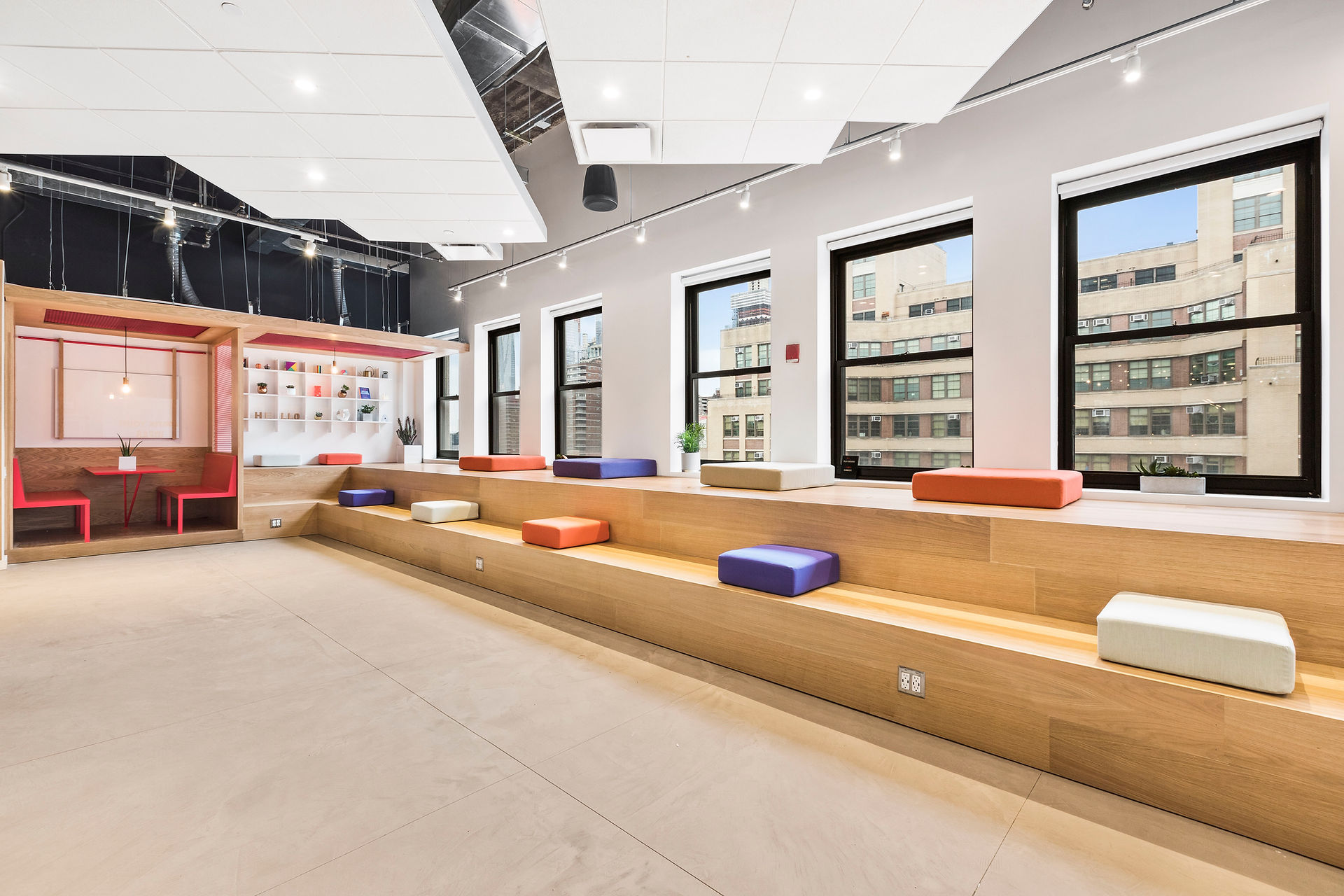


Flexible Workspace as a New Income Layer: What Commercial Property Owners Need to Know


The commercial property market is shifting, and it's worth understanding why before deciding what to do about it.
Businesses still need professional space to work, meet clients and grow teams. What's
changed is how they want to occupy that space. Long leases and fixed footprints are no
longer the default. Start-ups, professional services firms and growing companies
increasingly want flexibility - the ability to expand, contract or reconfigure as their
needs change.
For property owners and asset managers, that shift isn't a threat to the leasing model.
It's an opening the leasing model was never built to capture.
The Real Cost of Underutilised Commercial Space
Vacant space doesn't just sit idle - it actively costs money. Rates, levies and running
costs continue whether or not a tenant occupies the floor, and conventional leasing can
take a long time to fill that gap.
The question isn't whether to sell the asset or change your core strategy. It's simpler
than that: can existing space be put to work differently, inside the strategy you already
have?
A professionally managed flexible business centre is one answer.
What a Managed Flexible Workspace Model Actually Looks Like
Rather than building a flexible workspace business from the ground up, an owner can
appoint a specialist operator to run it - much the way a hotel owner appoints a hotel
management company rather than running the property personally.
In this model:
You provide the space and fit-out capital
You retain full ownership of the asset
The operator designs, fits out and manages the day-to-day business centre
Revenue flows directly to you as the property owner
The result is a new, diversified income stream inside an asset you already own —
without taking on a second business.
Three Reasons This Matters for Owners
1. It puts underused space to work.
Rather than holding out exclusively for a conventional long-term tenant, part of the
building can serve multiple smaller businesses and flexible workspace users at once -
effectively a second commercial product within the same asset.
2. It reaches demand your leasing model structurally can't.
Conventional leasing depends on tenants large enough to sign a lease. Every 1-15
person business that can't isn't a missed deal - it's demand that was never inside your
leasing pipeline to begin with. A business centre opens that segment up as a working
income stream, alongside leasing rather than instead of it.
3. It accommodates how tenant needs are changing.
Some businesses need permanent headquarters. Others need satellite offices, project
space or meeting facilities without a large lease commitment. Flexible workspace lets
one building serve a wider range of occupiers - and it can run alongside conventional
leasing rather than replacing it.
The Operational Reality Worth Being Honest About
Running a business centre is a genuinely different discipline from leasing commercial
property. It requires ongoing management of marketing, sales, occupancy, billing,
reception, community, technology and workspace configuration - every day, not just at
lease signature.
Building that capability internally takes real time and specialist expertise. This is
precisely the gap a partnership with an experienced operator is designed to close:
you're not being asked to become a flexible workspace operator, only to make a
decision about how a portion of your asset is used.
Ownership and Operations, Kept Separate
In Office Co.s model, you retain the asset. Office Co. operates the flexible workspace
component on your behalf - from design and fit-out through to daily operation.
The model has been running in Pretoria for seven years, currently serving more than 80
businesses across its centres, with sustained average occupancy above 85%.
A Business Centre Can Strengthen the Whole Building, Not Just the Space It Occupies
The value isn't confined to the income generated within the centre itself. It can extend to
the building as a whole - a prospective long-term tenant may value access to extra
meeting rooms or short-term workspace, and smaller businesses that start in the flexible
space may eventually grow into larger premises elsewhere in the building. Over time,
that can create a building that serves a genuinely wider range of business sizes.
Not Every Building Is a Fit
This isn't a fit-out exercise you can apply anywhere. Suitability depends on location,
surrounding business density, available space and configuration, and realistic demand.
Office Co. starts every conversation with an assessment of whether a building suits the
model - not with a pitch.
Before Deciding, See It Operating
This is a commercial property strategy, not a design trend. Office Co.s model lets the
landlord keep the property and the income while Office Co. takes on the operational
responsibility of running the business centre.
If you're weighing whether this fits your asset, the most useful next step is seeing it in
practice - visiting a working centre, understanding how it actually runs, and discussing
your building on its own terms.
Your asset. Your income. A new way to put commercial office space to work.
Comments